The problem
A typical developer runs sales in a CRM (or a notebook), inventory in a spreadsheet, collections in accounting software and RERA filings by hand. Every hand-off is a chance to double-book a unit, miss a demand letter or file an inaccurate report. RERA requires promoters to keep the authority updated, including quarterly progress and booking details, so inaccurate data is a compliance risk, not just an inconvenience.
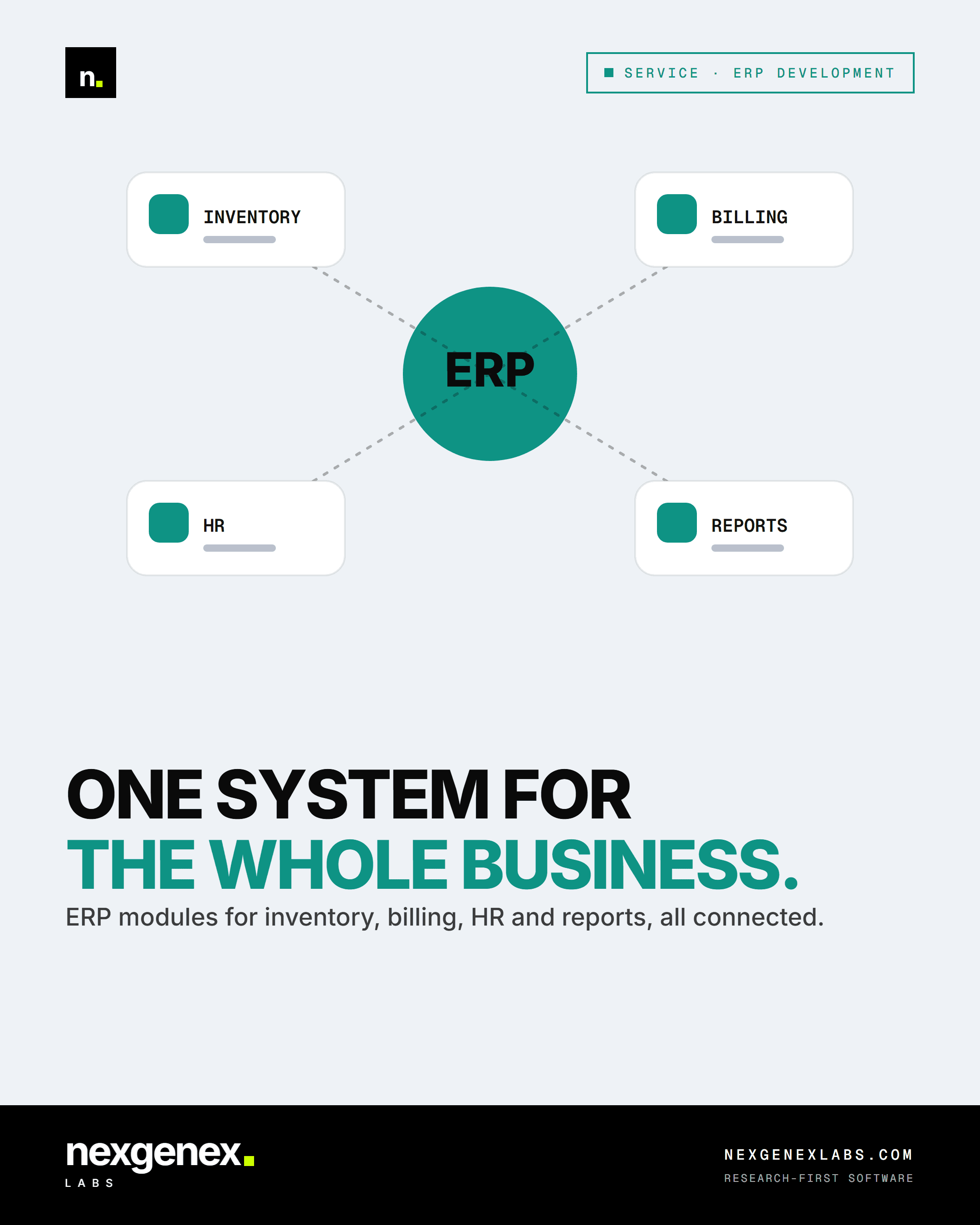
Save it. Share it with your team.
The short version of this post, ready for your Instagram Story or feed.
Core domains
| Domain | Owns | Key rule |
|---|---|---|
| Leads | Enquiries from portals, ads, WhatsApp, walk-ins | De-duplicate by phone number; every lead has an owner |
| Inventory | Towers, floors, units or plots, with status | A unit can be in exactly one state: available, held, booked, registered |
| Pricing | Base rate, floor rise, PLC, parking, taxes | Versioned price lists; a booking freezes the version |
| Bookings | Allotment, buyer details, agreement | Holds expire automatically |
| Collections | Payment plan linked to construction milestones | Demand letters triggered by milestone completion |
| Compliance | RERA registration data, progress, bookings | Reports generated from the same data, never retyped |
Design decisions that matter
- Inventory as a state machine. Model unit status transitions explicitly and enforce them in the database with a row lock or optimistic version, so two sales executives can't book the same flat.
- Time-boxed holds. A hold expires after, say, 48 hours unless a booking payment arrives. A scheduled job releases it.
- Milestone-driven billing. When the site engineer marks "slab 5 complete" with photos, the system raises demand letters for every buyer on that payment plan.
- Payments by webhook. Booking amounts and instalments via UPI and payment links, confirmed by gateway webhooks with idempotency keys.
- Document vault. Agreements, allotment letters and receipts stored with access logs, shared with buyers through the portal.
- Audit trail on everything. Price changes, discounts and status changes record who, when and why.
Integrations
- Lead sources: property portals, Meta and Google lead forms, website forms, WhatsApp Business API.
- Telephony: click-to-call and call recording linked to the lead.
- Accounting: push receipts and invoices to your accounting or ERP system.
- Registration: in Chhattisgarh, the registry reforms (online fee payment and links to the Bhuiyan land records system) mean the platform can prepare data for registration and track it to mutation.
Privacy and security
Buyer data includes PAN, Aadhaar references, income documents and bank details. Encrypt documents at rest, restrict access by role, mask sensitive fields in lists, and set retention rules. These are core DPDP obligations from May 2027 (details).
How Nexgenex Labs can help
We design and build CRM and ERP systems and buyer portals for real estate developers. Talk to an architect.
Sources
Have a project like this in mind?
Talk To Our Team →